
Labour – Vaginal / Cesarean Delivery
Labour – Vaginal / Cesarean Delivery
Labour and delivery care focuses on ensuring a safe birth for both mother and baby through well-planned vaginal or cesarean delivery, guided by maternal health, fetal condition, and pregnancy progress.
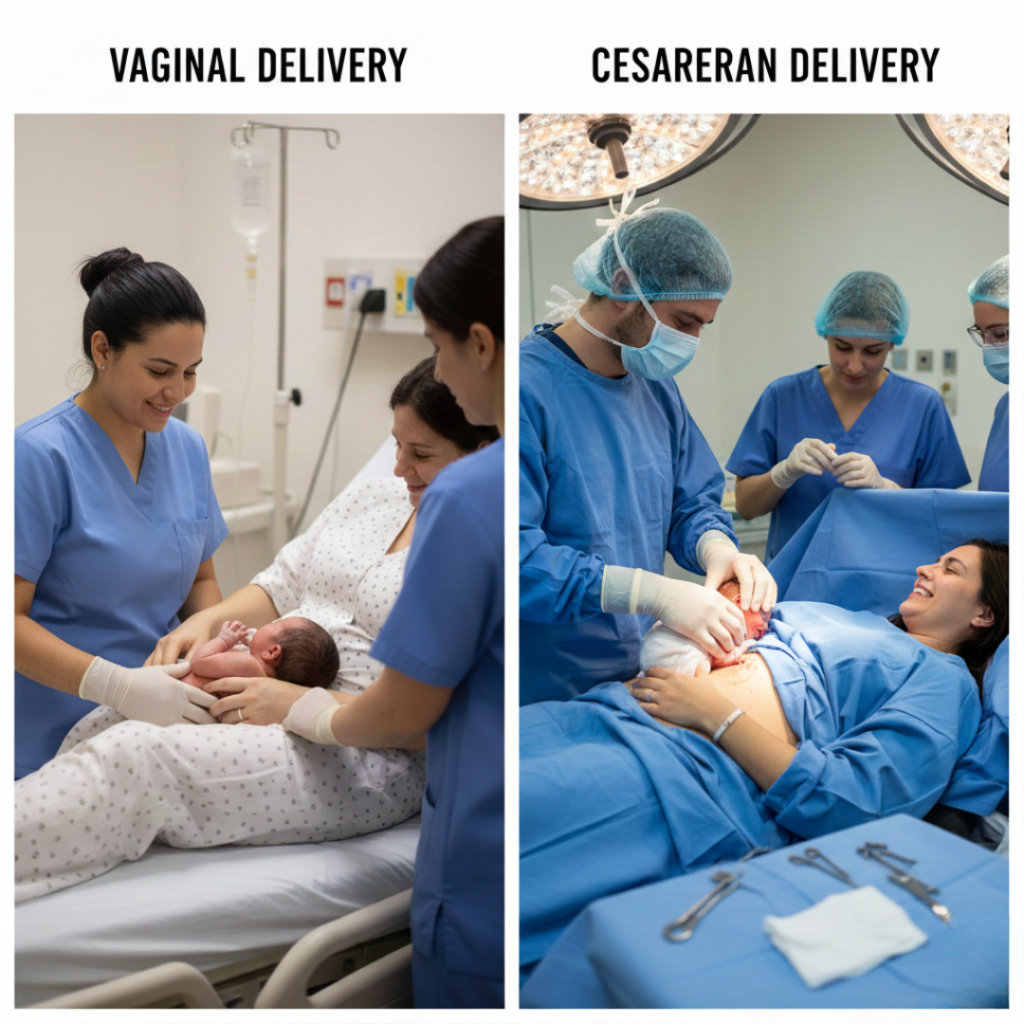
Vaginal Delivery
Vaginal birth is the natural method of childbirth and is encouraged when pregnancy and labour progress normally.
Indications
- Healthy mother and baby
- Normal fetal position
- No major pregnancy or medical complications
Benefits
- Faster recovery for the mother
- Lower risk of infection
- Shorter hospital stay
- Early mother–baby bonding
Management
- Continuous labour monitoring
- Pain management options
- Assisted delivery if required
- Immediate newborn care after birth
Cesarean Delivery (C-Section)
A cesarean section is a surgical procedure performed when vaginal delivery may pose risks to the mother or baby.
Indications
- Fetal distress
- Previous cesarean delivery
- Breech or abnormal fetal position
- Placenta previa or bleeding
- Multiple pregnancy or medical complications
Procedure
- Planned or emergency surgery under anesthesia
- Safe delivery of the baby through abdominal incision
- Close monitoring during and after surgery
Recovery
- Longer recovery compared to vaginal delivery
- Pain management and wound care
- Hospital stay of 3–5 days
Delivery Planning
- Individualized birth plan discussion
- Decision based on medical safety and patient preference
- Preparedness for emergency intervention if needed
Post-Delivery Care
- Monitoring of mother and baby
- Breastfeeding support
- Pain control and infection prevention
- Guidance for postpartum recovery
Risks & Complications
- Vaginal: tears, prolonged labour (rare)
- Cesarean: infection, bleeding, delayed recovery
With expert obstetric care and continuous monitoring, both vaginal and cesarean deliveries can be conducted safely, ensuring the best possible outcome for mother and baby.